HANDS® creating innovative
Digestive health plays an important role in overall well-being. However, conditions such as peptic ulcers can cause persistent stomach discomfort, pain, and a disruption to everyday life. Although commonly associated with acidity, peptic ulcers are specific sores that develop in the lining of the stomach or the upper part of the small intestine.
Understanding the causes, recognising the symptoms, and seeking appropriate medical care are essential steps towards effective management.
With advances in pharmaceutical formulations, healthcare professionals have several treatment options available to help manage peptic ulcers and their associated symptoms.
Peptic ulcers are open sores that develop in the inner lining of the digestive tract. They commonly occur in two locations:
The stomach and duodenum have protective mechanisms that help prevent damage from digestive acids. When these protective mechanisms are weakened or the lining is damaged, ulcers can develop.
Peptic ulcers are treatable, but appropriate diagnosis is important to determine their underlying cause and the most suitable treatment.
Several factors can contribute to the development of peptic ulcers.
Helicobacter pylori (H. pylori) is a bacterium that can infect the stomach lining. It is one of the leading causes of peptic ulcers and may interfere with the stomach’s natural protective barrier.
When an H. pylori infection is responsible, treatment generally involves prescribed antibiotics alongside acid-suppressing medication.
Non-steroidal anti-inflammatory drugs (NSAIDs), such as ibuprofen and aspirin, can damage the protective lining of the stomach, particularly when used frequently or over long periods.
People who regularly take these medicines should consult their healthcare professional about their risk of ulcers.
Smoking may interfere with ulcer healing and increase the risk of complications. Certain medical conditions and individual risk factors can also influence ulcer development.
Important: Spicy foods and stress do not usually cause peptic ulcers directly, although they may aggravate symptoms in some people.
Symptoms can vary depending on the location and severity of the ulcer. Some people may experience mild discomfort, while others develop more persistent symptoms.
Common symptoms include:
Not everyone with a peptic ulcer experiences noticeable symptoms.
Seek urgent medical attention if you experience vomiting blood, vomit that resembles coffee grounds, black tarry stools, sudden severe abdominal pain, or fainting. These may indicate a serious complication, such as bleeding or perforation.
The treatment of peptic ulcers depends on their underlying cause, severity, and associated symptoms.
A healthcare professional may recommend the following approaches.
Proton pump inhibitors (PPIs) reduce the production of stomach acid, helping ulcers heal. They are commonly used in peptic ulcer treatment.
When testing confirms an H. pylori infection, a healthcare professional may prescribe a combination of antibiotics and acid-suppressing medication. Completing the prescribed treatment and confirming that the infection has been eradicated are important.
When ulcers are associated with NSAIDs, a doctor may recommend stopping or changing the medicine where appropriate, alongside treatment to protect the digestive tract.
Patients should not discontinue prescribed medicines without consulting their healthcare professional.
Certain medicines can help protect the damaged lining of the digestive tract or provide relief from associated discomfort.
Two ingredients used in some formulations are Sucralfate and Oxetacaine.
Sucralfate and Oxetacaine have different roles in managing ulcer-related discomfort.
Sucralfate acts locally by forming a protective barrier over ulcerated tissue. This barrier helps shield the affected area from stomach acid and other irritants, supporting the healing process.
Oxetacaine is a local anaesthetic that helps relieve pain by reducing the sensitivity of nerve endings in the affected area.
When combined in an appropriate formulation, these ingredients can help protect ulcerated tissue and relieve associated pain and burning sensations.
However, treatment must be selected according to the patient’s condition and the advice of a qualified healthcare professional. Symptom relief alone does not eliminate the underlying cause of every peptic ulcer.
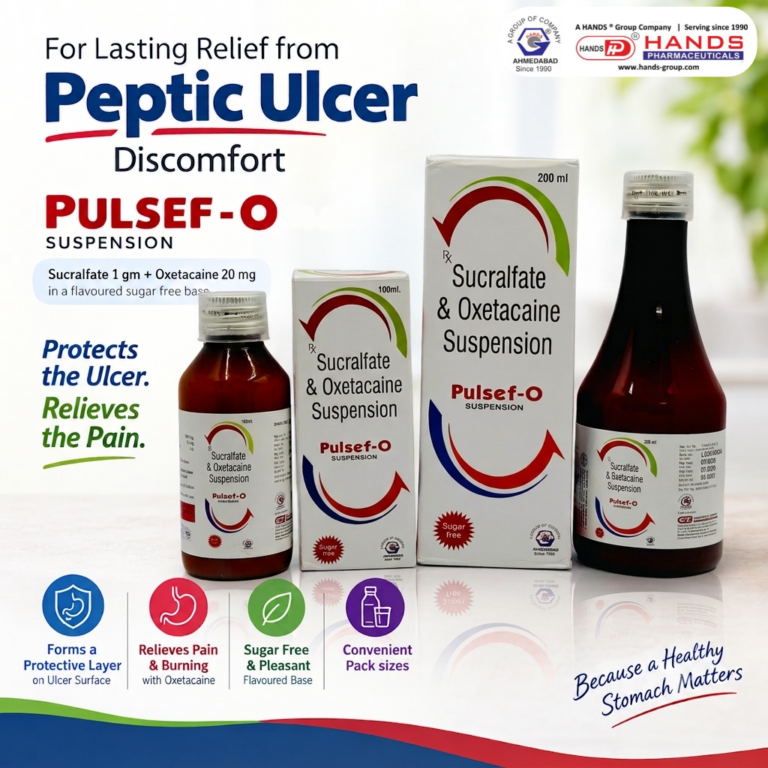
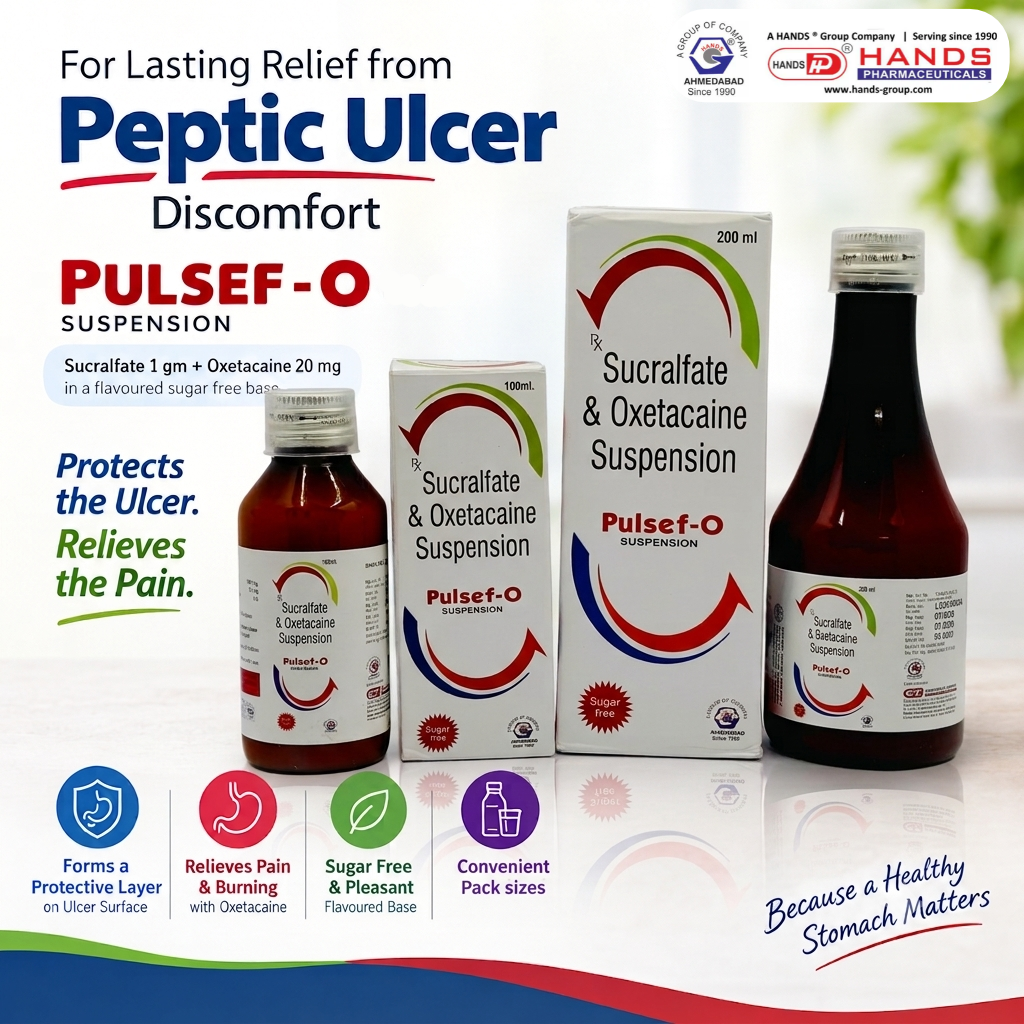
As part of its pharmaceutical product range, Hands Pharmaceuticals presents PULSEF-O Suspension, containing Sucralfate 1 g and Oxetacaine 20 mg per 10 mL in a flavoured, sugar-free base.
The formulation combines the protective action of Sucralfate with the local anaesthetic action of Oxetacaine to support the management of peptic ulcer-related symptoms.
PULSEF-O Suspension is intended to be used under medical supervision. Its suitability, dosage, duration of treatment, and potential interactions should be assessed by a qualified healthcare professional.
Product information should always be verified against the approved product label before publication.
Although lifestyle changes cannot replace appropriate medical treatment, certain habits can help people manage digestive discomfort.
Consider the following:
There is no single diet that cures peptic ulcers. The priority is to identify the cause and follow the appropriate treatment.
Peptic ulcers are a common digestive health concern, but appropriate diagnosis and treatment can help manage symptoms and promote healing. Understanding the underlying cause is essential, whether it involves an H. pylori infection, medication-related damage, or another contributing factor.
Medicines containing Sucralfate and Oxetacaine may have a role in protecting ulcerated tissue and relieving associated discomfort as part of an appropriate treatment plan.
PULSEF-O Suspension by Hands Pharmaceuticals combines these two ingredients in a flavoured, sugar-free formulation for use under medical supervision.
For persistent stomach pain, recurring burning sensations, or other digestive concerns, consult a qualified healthcare professional for appropriate evaluation and treatment.